Can Turnitin Detect ChatGPT? What Students Usually Get Wrong (2026 Guide)
Summary
It analyzes writing patterns associated with AI text, not specific tools or logs.
It gives a probability estimate, not a verdict:
The AI score shows how much text statistically resembles AI-style writing, not proof of misuse.
Students often misunderstand what it measures:
Many think Turnitin knows which AI tool was used, that a high score means cheating, or that no flag means no AI; none of these are accurate.
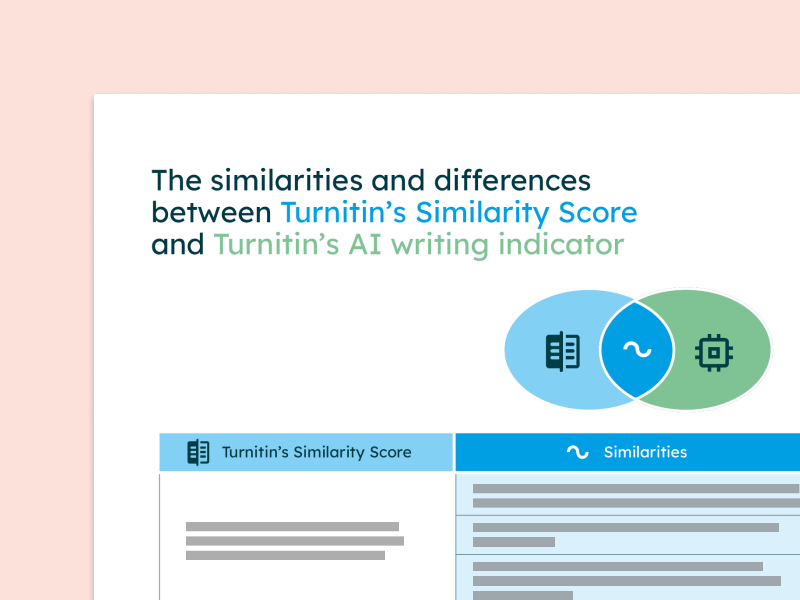
AI detection differs from plagiarism checks:
Plagiarism detection matches text to known sources; AI detection looks at stylistic patterns, not source matches.
False positives and false negatives are real:
Turnitin can mistakenly flag human writing as AI-like or miss AI content when it’s heavily paraphrased. Research shows detection isn’t perfectly reliable in complex scenarios.
Real controversies show limitations:
Instances like the Australian Catholic University “robo-cheating” issue illustrate how relying solely on AI scores can lead to unfair academic scrutiny.
Most instructors use AI scores only as context:
Educators typically combine detection data with drafts, discussions, and prior work when interpreting a report.
Practical advice for students:
Use AI tools sparingly, mainly for brainstorming.
Edit and personalize AI outputs to reduce pattern similarity.
Keep draft histories as evidence of your writing process.
Talk with your instructor if flagged.
Responsibly interpret AI scores:
A high “AI likelihood” number suggests similarity in patterns, not definitive evidence. Context and human judgment are essential.
AI detection is part of a larger academic integrity challenge:
Detection tools alone aren’t enough — educators are encouraged to design assessments and discussions that focus on critical thinking and process.
Overall takeaway:
Turnitin can suggest AI-like writing patterns, but it can’t prove tool use or intent. Its scores are useful signals, not definitive judgments.
When I first heard classmates talking about Turnitin “catching ChatGPT,” I didn’t give it a second thought, until it happened to someone I know: They submitted a self-authored paper and months later were alarmed to see it tagged with “AI likelihood” even though they never used ChatGPT. That set off confusion, dread, and a bunch of questions for which the answers weren’t obvious.
Now many students think Turnitin can “tell the difference” between text generated by specific tools like ChatGPT. The reality is more complex. Turnitin, in 2026, can mark text that looks like it has the statistical fingerprints of output from an AI tool, including ChatGPT, but it won’t name the tool or provide an absolute answer about whether anything has gone wrong. To know what Turnitin really can, why it can and can’t be trusted, and what to and not to worry about, we have to peel back layers of technology and myth.
1. What Turnitin Actually Detects, Not “ChatGPT Used”
Turnitin’s AI writing detection aims to spot passages that may look like they were generated by generative tools such as ChatGPT, Bard, or other large-language models by looking for patterns in writing, sentence structure and style that are statistically associated with text created by AI.
But there are two important things to understand:
✔ Turnitin does not detect ChatGPT by name. It does not access any private logs from OpenAI or any other provider, nor does it have markers indicating exactly which tool was used.
✔ It provides a probability estimate, not a conclusive determination. The score indicates how much of the text statistically resembles AI-style text patterns, not that it definitely came from ChatGPT.
In short, Turnitin’s AI indicator is a pattern-recognition tool,similar to a lab test that suggests likelihood rather than “detects” the specific source.
For a deeper breakdown on how Turnitin’s AI detection works and what it can and cannot tell you about generative AI in student writing, see our pillar article Does Turnitin Detect AI in 2026? What It Flags, Why It Flags, and Limitations.
2. Common Student Misconceptions About ChatGPT Detection
Even among well-meaning students, several misconceptions about Turnitin’s AI detection keep popping up online.
Misconception: “Turnitin will know exactly if ChatGPT wrote my essay.”
No, Turnitin doesn’t know which specific AI model wrote something. It doesn’t compare your text with a list of ChatGPT outputs; instead, it looks at stylistic patterns that may resemble machine-generated language.
Misconception: “A high AI percentage means I cheated.”
Turnitin’s score is an indicator of pattern similarity, not proof of academic dishonesty. Even Turnitin’s own guidance stresses that the AI score should be used by educators in context, not as a sole verdict.
Misconception: “If it doesn’t flag AI, then I surely didn’t use it.”
False negatives can and do happen, especially when students edit, paraphrase, or mix human and machine-generated text. Independent assessments show AI detectors can miss AI-like content, especially when it has been modified.
3. How Turnitin’s AI Detection Works Technically
Turnitin’s AI writing detection looks at chunks of text and scores them based on:
● Patterns of sentence structure statistically common in AI-generated responses
● Consistent tone and repeated phrasing
● No variation from a human’s phrasing
The individual scores add up to an overall probability that chunks of the text are machine-generated.
This is not plagiarism detection. Finding plagiarism is claiming that someone’s text is copied from a known source. AI detection is looking at writing style, not matching text to known sources.
This explains why one can be flagged for having written everything from scratch using one’s own knowledge and ideas.
4. Accuracy, False Positives, and False Negatives , What Students Need to Know
Apparsently perfect? The real world performance of AI detection tools, including those from Turnitin, isn’t.
False Positive: Human Text Predicted as AI
A false positive occurs when Turnitin predicts that a human sentence has a high probability of being AI generated. Teachers and developers agree that false positives may occur when content has consistent structure or formal academic language.
And Turnitin will show a single asterisk (*) for scores in the 1–19% range , as a way to help prevent low confidence predictions from being misinterpreted.
Real world example: A student shared an online discussion that Turnitin’s AI detector flagged their original paper as “likely AI” generated , triggering an academic integrity investigation, even though the student did not use any AI.
False Negative: AI Text Not Detected
Turnitin and other tools struggle less when AI generated text is heavily paraphrased or combined with genuinely human writing. Research shows that most AI detectors do not reliably detect heavily paraphrased AI text.
So not getting a flag isn’t a surefire sign that no AI was used.
Turnitin itself acknowledges that false positives can occur because its AI writing detection is a statistical model, and educators must use professional judgment rather than relying solely on the score.
5. Real-world cases and controversies in AI detection
There have been real controversies over AI detection tools in academic settings.
One was the “robo-cheating” backlash at Australian Catholic University where a number of students were accused of academic misconduct solely on the basis of Turnitin AI indicator, with investigations and delayed graduation causing anxiety for many students. The university had to drop the AI detection function entirely after concerns over accuracy and fairness.
These episodes show why some instructors and academic institutions call for care when considering AI detection scores.
However, multiple independent studies have shown limitations of AI detectors — including Turnitin — can produce both false positives and false negatives, revealing limitations in reliably distinguishing AI-generated text.
6. How Educators Typically Use AI Detection in Practice
Most educators do not treat AI detection as a single decisive indicator. Instead, it is used alongside other evidence, such as:
● Writing samples from prior assignments
● Draft histories or revision timelines
● Oral discussions about the work’s content
This human-involved approach reduces the risk of penalizing students unfairly based on an algorithmic estimate.
7. Practical Tips for Students About Turnitin AI Detection
If you’re worried about ChatGPT detection in your work, here are key practices to keep in mind:
1. Use AI tools sparingly and responsibly. Using AI for brainstorming is less likely to trigger flags than generating entire paragraphs.
2. Edit and personalize AI outputs. Heavy editing makes text less likely to match AI statistical patterns.
3. Keep drafts and revision histories. These provide evidence of your writing process if questions arise.
4. Ask for clarity from instructors. If a Turnitin report flags AI, ask what segments are of concern before assuming misconduct.
8. Interpreting AI Detection Scores Responsibly
If Turnitin shows an AI likelihood score:
💡 Don’t panic at the percentage number. A high score suggests stylistic similarity, not proof.
💡 Look at the specific flagged sentences. Context matters more than percentage.
💡 Discuss with your instructor. Many teachers view these scores as starting points for conversations, not automatic judgments.
9. The Bigger Picture: Academic Integrity and AI
AI writing detection is part of a wider issue. Accurately detecting AI use may be difficult by design, because generative AI can create text that’s indistinguishable from human writing. Some experts in education say that detection tools alone aren’t enough and spell out more robust assessment practices that evaluate critical thinking, process, rather than just pure product.
10. Conclusion — What Turnitin Can Tell You (and What It Can’t)
Yes, Turnitin can detect patterns statistically associated with AI tools like ChatGPT, but it:
✔ Doesn’t identify specific tools
✔ Can generate false positives and negatives
✔ Should not be used as sole evidence for misconduct
A detection score is best treated as a useful signal, not a verdict. When interpreted with context — instructor insight, writing history, and clear communication — it can support academic integrity without causing unnecessary anxiety.
FAQs — What Students Often Ask About ChatGPT Detection
Q: Can Turnitin tell if I used ChatGPT?
Turnitin’s AI detector doesn’t identify which AI tool was used — it indicates when text resembles patterns commonly found in AI outputs, including ChatGPT-like text.
Q: Why did Turnitin flag my human writing as AI?
Human writing can be flagged if it has a very consistent tone or structure that resembles statistical patterns the model associates with AI.
Q: Is Turnitin’s AI detection 100% accurate?
No. Even Turnitin notes that false positives and negatives can occur, especially under 20% AI score ranges.
Q: Should a high AI score get me in trouble?
A high score suggests similarity to AI patterns but does not prove misconduct. It should prompt conversation with your instructor rather than automatic punishment.

Related Articles
View all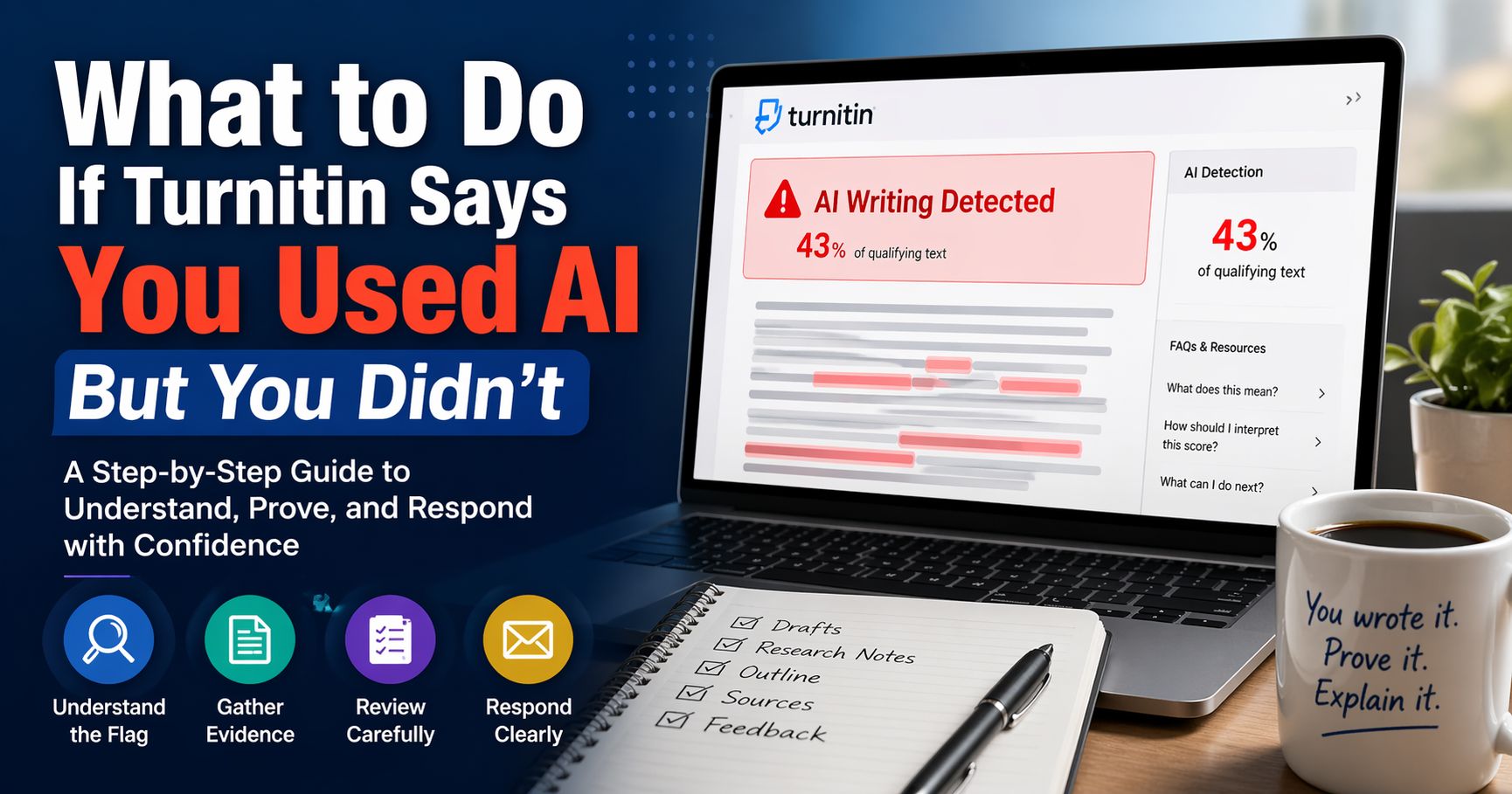
What to Do If Turnitin Says You Used AI But You Didn’t
If Turnitin flags your writing as AI, learn how to review the report, gather evidence, and respond calmly and responsibly.
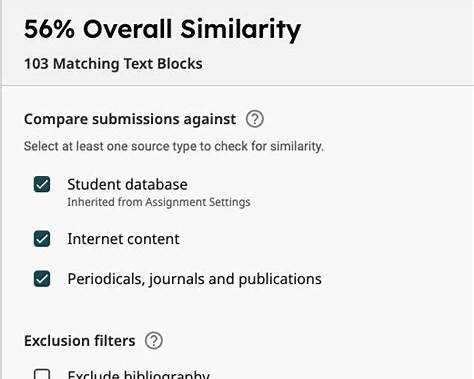
Turnitin AI Accuracy: Why Lab Accuracy Claims Don’t Match Real Classrooms
How reliable is Turnitin’s AI detection in real academic settings? This guide examines accuracy claims, false positives, false negatives, and why AI detection scores should be interpreted as probabilities, not proof.
Why Does Turnitin Flag Writing I Typed Myself? Common Triggers
Wondering why Turnitin flagged your own writing as AI or problematic? This guide breaks down the most common triggers — from statistical writing patterns and phrasing issues to formatting quirks — and explains why even original text can be misclassified.