What Percentage Is Acceptable on Turnitin? Why Context Matters More Than the Number
When I first began using Turnitin on my assignments, I had a prayer for a magic acceptable percentage, like “under 15% and you’re good.” Then I’ve come to understand that there is no single number that means your work is good or bad. There is no rule in Turnitin that says if you are over this, it’s bad; the number simply reflects how much of your text turned up in Turnitin’s database. The judgment is made about how those matches came to be and what was matched. For a complete explanation of what Turnitin’s similarity score actually means, see our detailed guide.
In this article, I’ll describe how I think about a Turnitin percentage based on my own experience, what the number doesn’t mean, and how to view your report to help you become better.
1. What Turnitin’s Similarity Score Actually Represents
Before discussing “acceptable” percentages, it helps to restate what the similarity score is:
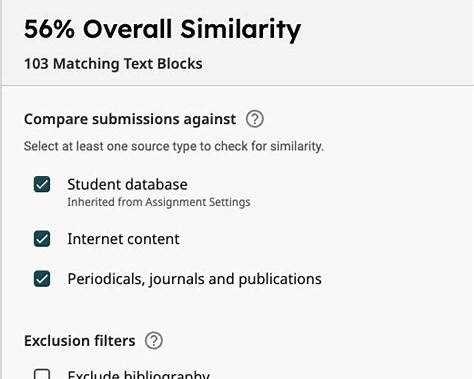
Turnitin’s similarity score is the percentage of text in your submission that matches text found in its database of internet content, academic sources, and previously submitted work.
That means:
● This score does not measure plagiarism itself
● It highlights matched text so you and your instructor can examine it
● Even correctly quoted and cited material will be counted as a match
Because of this, many academic guides emphasize that the number alone isn’t a good measure of academic integrity, it must be interpreted in context.
Even correctly quoted and cited material will be counted as a match. For a more authoritative explanation, refer to Turnitin’s official guide to interpreting similarity scores.
2. Why There Is No One “Acceptable” Percentage
I was told , from both official sources and chatting with professors , that there is no single percentage that defines an acceptable Turnitin score. Depending on assignment , subject area , and instructor there may be different expectations.
Scenario | Does a Number Exist? | Why Context Matters |
Short essay | Might be low | But high score could still be OK if mostly quoted references |
Research report | No fixed rule | Standard technical terms and methods appear in many sources |
Thesis | Sometimes formal guidelines exist | Some institutions set internal thresholds, others don’t |
In fact, academic librarians and guides make it clear that there really isn’t a universal acceptable percentage, instead, similarity must be read alongside how text is used. See this academic library guide on Turnitin similarity reports for more detail.
3. “Acceptable” Ranges People Commonly Mention, But With Caution
The “Acceptable” Ranges People Often Mention , But With .
Obviously no rule is set in stone but in my experience and what I have seen in the community, many teachers and students mention ranges like these as a baseline for interpretation:
Rough Similarity Range | How Some People Think About It | Reality Check |
0–10% | Often seen as low | Could lack citations or context |
10–15% | Often considered “safe” | Good starting point but not a guarantee |
15–25% | Commonly discussed as acceptable | Depends heavily on how matches came about |
25–40% | Raised eyebrows for many | Could be fine if most matches are properly cited |
40%+ | Usually high | But may only be high because of references & quotes |
I want to stress that these ranges aren’t universal rules, they’re just ranges you might hear discussed in academic settings. What truly matters is why the matches occurred, not the percentage alone.
4. Why Context Matters Far More Than the Number
When I look at my similarity report, I always focus on these questions first:
1. Are the Matches Properly Quoted and Cited?
If a big chunk of your matches are in quotation marks and correctly referenced, the high percentage might not be a problem — it just reflects appropriately used sources.
2. Are the Matches from Reference Lists or Standard Terminology?
Some matches come from bibliography or common academic terms. These are usually not problematic but can push up the numerical score.
3. Is the Report Highlighting Large Blocks of Similar Text Without Attribution?
This is the kind of match that matters, and not necessarily the number itself. Even a low percentage could conceal poorly cited overlapping text.
Once I learned to ask these questions, I stopped worrying when I saw a 30% similarity — and instead checked the detail view first. Sometimes it was fine, other times I revised; the number alone didn’t tell me which.
5. My Approach When I See What Looks Like a High Score
Over time, I developed a more nuanced process:
Step-by-Step Interpretive Check
● 👀 Open the full similarity report first — look where matches occur
● 📚 Check citations and quotations carefully
● 🧠 Consider the assignment type
● 📢 If unsure, talk to your instructor about specific match blocks
This process often gives me far more useful insight than just looking at “15% vs 30%.”
6. Common Myths About “Acceptable” Scores
Here are a few misunderstandings I used to have — and others often share:
🔹 Myth: “If the score is under 15%, I’m safe.”
✅ Reality: That might be fine, but context still matters more than the number.
🔹 Myth: “A high score means plagiarism.”
✅ Reality: A high similarity score could simply reflect properly cited quotes, references, or commonly used terms.
🔹 Myth: “Low percentage equals original text.”
✅ Reality: Sometimes low numbers hide poorly paraphrased text, which is problematic.
7. Key Takeaways: What Matters More Than Acceptable Percentages
Here’s how I now interpret similarity scores:
● There’s no fixed “acceptable” number — context and content matter most.
● A low number doesn’t automatically mean no issues.
● A high number doesn’t automatically mean plagiarism.
● Always examine the matched text and how it’s used.
● Use a thoughtful review process rather than chase a magic percentage.
FAQ: What Percentage Is Acceptable on Turnitin?
Q1: Is there a single “acceptable” similarity percentage on Turnitin?
A: No — Turnitin does not define a universal acceptable similarity score. The percentage simply shows how much text in your paper matches content in Turnitin’s database. Whether a percentage is acceptable depends on the type of assignment, instructor expectations, and — most importantly — how the matching text is used and cited.
Q2: Does a higher similarity percentage always mean plagiarism?
A: No. A high similarity score doesn’t automatically mean plagiarism. Turnitin flags text matches regardless of citation, which means even correctly quoted and cited material will be counted in the percentage. It’s up to the instructor (or you) to review the matched text in context.
Q3: Is a score like 15–20% generally acceptable?
A: Many instructors and writing resources suggest that scores around or below ~15–20% are common in well-written papers, especially essays and short research papers. But this is only a rough guide — what matters more is what portion of that percentage is properly cited or quoted versus potentially problematic.
Q4: Can a low similarity percentage still be problematic?
A: Yes. Even a low similarity score (e.g., <10%) could conceal poorly paraphrased or uncited content. The percentage is a starting point — you need to read the detailed similarity report to see exactly which text matched and why.
Q5: What do the color codes in a Turnitin report mean?
A: Turnitin uses colors to give a quick visual cue about the amount of matched text. While schools can show slightly different ranges, the common scheme is:
● Blue/Green: Lower overlap
● Yellow/Orange/Red: Higher overlap
However, color doesn’t judge quality — you still need to interpret the matches.
Q6: Should I filter out quotes or references before judging my score?
A: Yes, many instructors and writing guides recommend filtering out quoted text, bibliography, and very small matches when interpreting scores. This helps you focus on text that might require revision or better citation.
Q7: What is the best way to interpret my similarity report?
A: The best practice is to:
● Click into the detailed similarity report
● Review where matches occurred
● Check if those matches are properly cited, quoted, or common terminology
● Ask your instructor if you’re unsure
Turnitin’s score should be one input in a broader academic judgment process.

Related Articles
View all
Why Turnitin Flags Citations, Quotes & References: What It Really Means
Turnitin often highlights properly cited quotes and reference text,and it doesn’t mean you plagiarized. Learn why citations show up in similarity reports, what “false alarms” are, and how I check and interpret them without breaking formatting.
Is 25% Turnitin Similarity Bad? How to Interpret Matches & What Matters Most
Got a 25% similarity score on Turnitin and feeling worried? This guide breaks down what that percentage actually means, how to examine the matched text, and when a high similarity score is truly a concern, beyond just a number.
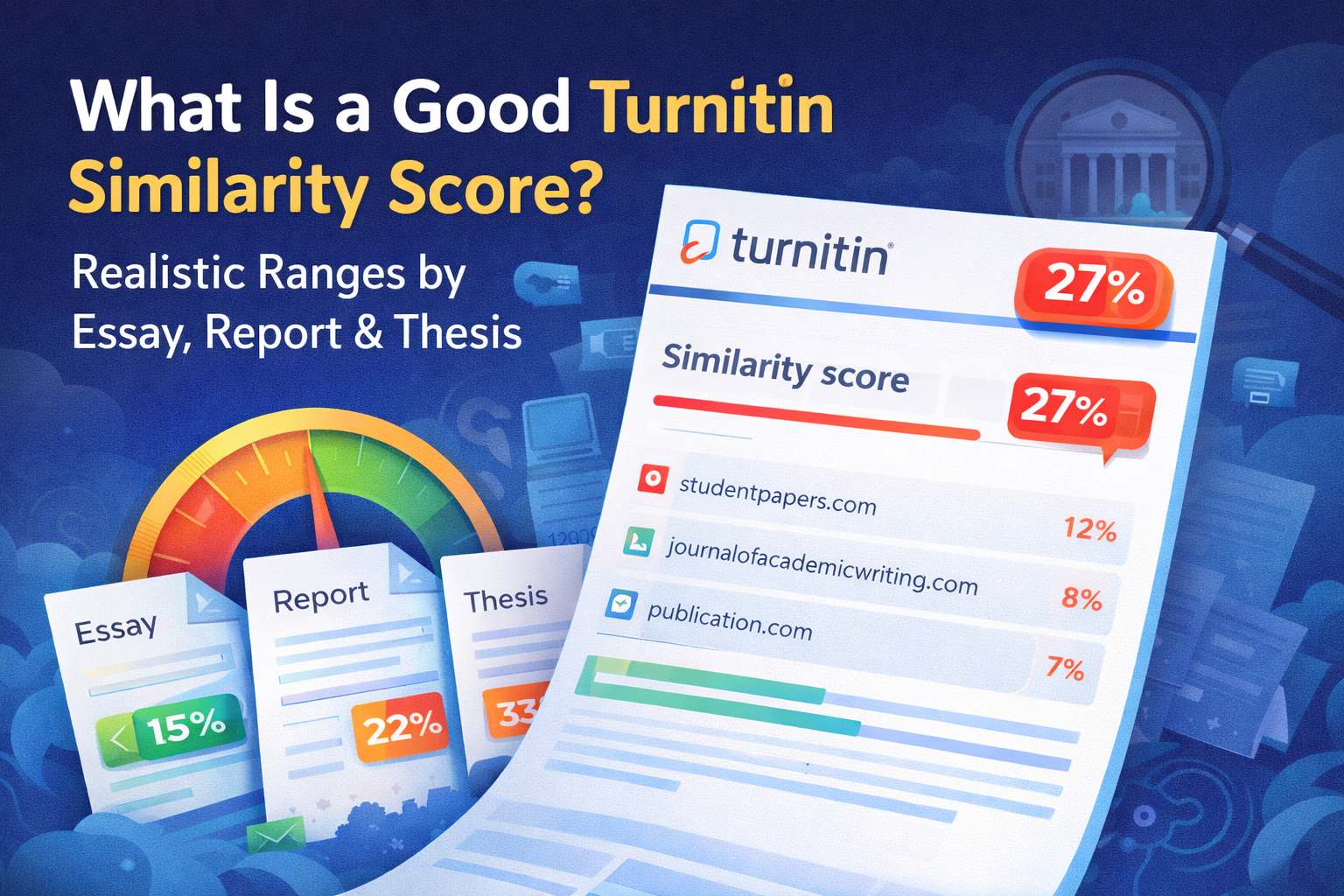
What Is a Good Turnitin Similarity Score? Realistic Ranges by Essay, Report & Thesis
Wondering what similarity percentage is considered acceptable on Turnitin for essays, reports, and theses? This guide explains realistic score ranges by paper type, why numbers vary by context, and what to check first when your score looks high.