What Is a Good Turnitin Similarity Score? Realistic Ranges by Essay, Report & Thesis
Summary
Key Takeaways
✔ Lower scores aren’t automatically better if they miss necessary citations.
✔ Typical ranges help set expectations by assignment type, but aren’t strict rules.
✔ Always examine why specific text is highlighted before deciding what to revise.
When I first started using Turnitin as a student, I was all that desperate for this magic number , a number I could target that would make my work look “good” to my instructor. I soon realized there really isn’t a single “good” Turnitin score that works for every assignment or subject.
What I’ve found, from both my own experience and reviewing various academic resources , is learning how similarity percentages generally vary by assignment and how instructors tend to view them. The key isn’t about covering up the matches. It’s about interpreting the matches intelligently. In this post I’ll guide you through realistic similarity ranges for essays, reports, and dissertations and what you might want to check first if the percentage looks scary.
1. Why There Is No Single “Perfect” Turnitin Score
Turnitin doesn’t have any cutoff that “definitely” separates a “good” score from a “bad” score. Turnitin isn’t even designed to detect plagiarism , it just identifies matching text.
What that really means is:
● The amount of allowed quoting and citations varies by course.
● Certain topics have more background or technical terms that are likely to come up as matches.
● A low score with a few poorly cited matches could be worse than a higher score with a lot of small well-cited matches.
Instead of worrying about a specific percentage, focus on understanding the context of the matches within the detailed report.
Many universities and Turnitin (https://www.turnitin.com/guidance/student) itself emphasize that similarity percentages are not plagiarism scores, but indicators that require contextual review rather than fixed thresholds.
2. Typical Similarity Ranges by Paper Type
Below is a practical breakdown I use as a starting point, not as a guaranteed rule — based on common norms and academic guidance.
Assignment Type | Typical Similarity Range | Why This Range Might Be Normal |
Essay | ~10–20% | Shorter text with fewer quotes and less space for extensive quoting. |
Lab / Research Report | ~15–30% | Reports often include methods, technical terms, and standard phrases. |
Thesis / Dissertation | ~20–35%+ | Literature-heavy work with many quotations and referenced sources. |
If you want a deeper explanation of how similarity scores are interpreted in practice, see our full breakdown in Turnitin Similarity Score Explained (2026): What’s ‘Good’, What’s Normal, What to Fix.
💡 Note: These ranges aren’t universally required by Turnitin, and many universities explicitly state that there is no fixed “acceptable” percentage ,instead they emphasize looking at the details of the matches.
These ranges reflect common academic practice rather than institutional rules, which is why instructors almost always review the report details instead of relying on a single number.
3. Why Those Ranges Aren’t Actually Rules
I’ve had instances , and so have other students , where a 30% score was never an issue because the majority of matched text was accurately cited background theory or standard definitions necessary to discuss the topic. Likewise, scores under 10% have still been questioned when the matched text was not appropriately paraphrased or cited.
The lesson here is: similarity percentage isn’t what instructors are most concerned about , the context and how you have utilized your sources is.
4. How I Interpret My Score When It Looks High
When I get a similarity score that feels “high,” here’s how I approach it — and it’s worked well for me:
1. Check Where the Matches Come From
Instead of panicking at the number, I look at the detailed similarity report. Turnitin highlights the exact sections that matched other sources, so I check whether those matches are:
● Direct quotations with proper citation
● References or bibliographies
● Standard, commonly used phrases in my field
● Paraphrased quotes from sources
If most of my matches fall into those categories, I’m typically less worried. If matches are large blocks of text without citation, that’s a red flag worth revising.
2. Pay Attention to Academic Expectations
Some disciplines expect more extensive quoting, especially in literature reviews or theoretical work. In my science reports, for example, method descriptions often give very predictable text matches — not because it’s copied, but because the method description is standard across many studies.
Turnitin’s guidance itself notes that matches can come from a wide range of legitimate sources, including:
● Properly quoted text
● Reference lists
● Technical phrases or definitions that can’t be paraphrased further
Many universities explicitly state that there is no ‘acceptable percentage’ and instead assess how sources are used.”
👉 https://libguides.mit.edu/academic-integrity/plagiarism
3. Consult Assignment Guidelines or Instructors
It might sound obvious, but one thing I do regularly now is check my class syllabus or ask the instructor what they consider a reasonable similarity range for that particular assignment. Many instructors have internal expectations, and they usually tell you if anything looks genuinely concerning, especially if the matches include uncited sources rather than standard academic phrasing.
5. When a Low Score Isn’t Necessarily Good
A very low score can also be just as bad as a high one, interestingly.
If your similarity is 0–5% for certain types of assignments, this could be because:
● You haven’t cited enough academic sources to support your evidence.
● You may have inadvertently omitted key sources that your instructor expects you to engage with.
I’ve seen this in some reviews where an almost “perfect” low score was actually a sign that you failed to engage with sources academically , which was exactly what the assignment was supposed to measure.
In some assessment rubrics, engagement with scholarly sources is part of the grading criteria, which can make extremely low similarity scores a signal of insufficient citation rather than originality.
Summary: What I’ve Learned About “Good” Scores
Here’s what I now consider when I look at a Turnitin similarity score:
● There isn’t one single “good” number that fits every assignment.
● Understanding where and why text matched matters far more than the percentage.
● Typical ranges — like 10–20% for essays and up to 30–35% for theses — are useful starting points, but not hard rules.
● Always review the detailed similarity report and discuss with your instructor if in doubt.
In short: the similarity score is a tool to help me refine my writing and citation practice — not a scorecard that judges my academic integrity on its own.
In practice, instructors care far more about why text matches than how much it matches.
📌 FAQ — Turnitin Similarity Score
Q1: What does the Turnitin similarity score actually mean?
A: The similarity score shows the percentage of text in your submission that matches other sources in Turnitin’s database. It does not automatically mean plagiarism—it’s simply a tool to help you review matching text.
Q2: Does a high similarity score mean I plagiarized?
A: No. A high similarity score does not automatically indicate plagiarism. It could be due to quotations, reference lists, or technical phrases that happen to match other sources. Academic judgement is needed to interpret matches.
Q3: Is there a “good” similarity score I should aim for?
A: There is no universal acceptable percentage for all assignments. What’s acceptable varies by institution, discipline, and assignment type. Some guides suggest aiming lower (e.g., ~15–20%), but the key is interpreting why matches occur.
Q4: Why did I get a high similarity score even though I cited sources properly?
A: Even correctly cited quotes, bibliographies, and common phrases can generate matches. Turnitin flags all matching text in its database; correct usage still counts toward the similarity score.
Q5: Can a low similarity score be bad?
A: Yes—an extremely low score might indicate you didn’t engage with enough sources, which may be required in research assignments. Some matching text is expected in academic writing.
Q6: What do the color indicators mean in a Turnitin report?
A: The color next to your similarity percentage typically reflects the amount of matching text (e.g., green for lower matches, yellow or orange for higher) but does not itself indicate plagiarism or academic penalties. Colors help visualize the amount of similarity only.
Q7: Should I exclude references or quotes when reviewing my similarity score?
A: Many instructors or systems allow you to exclude bibliographies, quoted text, and small matches when interpreting the report. This gives a clearer picture of how much meaningful text is matched.
Q8: Can Turnitin detect plagiarism from websites or student papers?
A: Yes. Turnitin compares your work against:
● billions of web pages,
● academic publications,
● and other student submissions in its database.
Matches from any of these sources are included in the similarity score.
Q9: If my similarity score is high, what should I do?
A: Instead of focusing on the percentage, you should:
1. Review the similarity report highlights.
2. Check if matches are quoted and cited correctly.
3. Ask your instructor about assignment expectations.
This approach is more valuable than chasing a specific number.

Related Articles
View all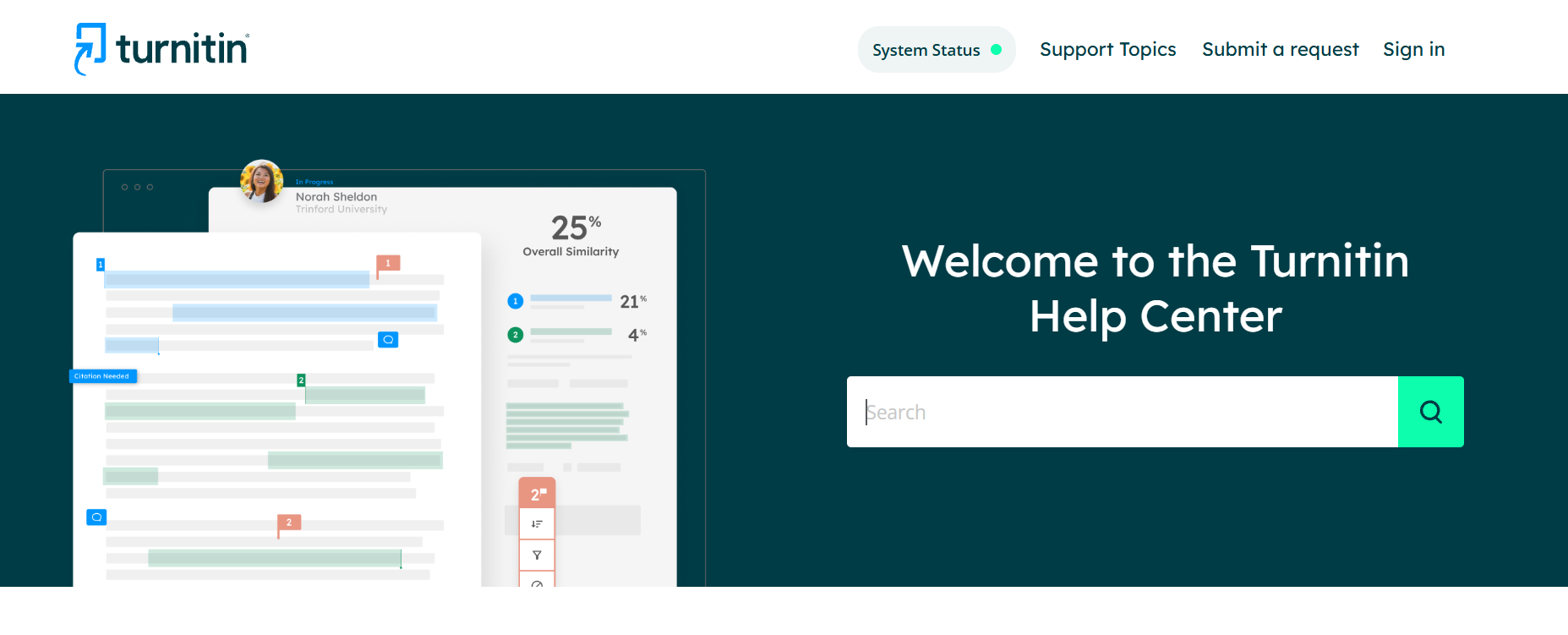
Why Turnitin Flags Citations, Quotes & References: What It Really Means
Turnitin often highlights properly cited quotes and reference text,and it doesn’t mean you plagiarized. Learn why citations show up in similarity reports, what “false alarms” are, and how I check and interpret them without breaking formatting.
Is 25% Turnitin Similarity Bad? How to Interpret Matches & What Matters Most
Got a 25% similarity score on Turnitin and feeling worried? This guide breaks down what that percentage actually means, how to examine the matched text, and when a high similarity score is truly a concern, beyond just a number.
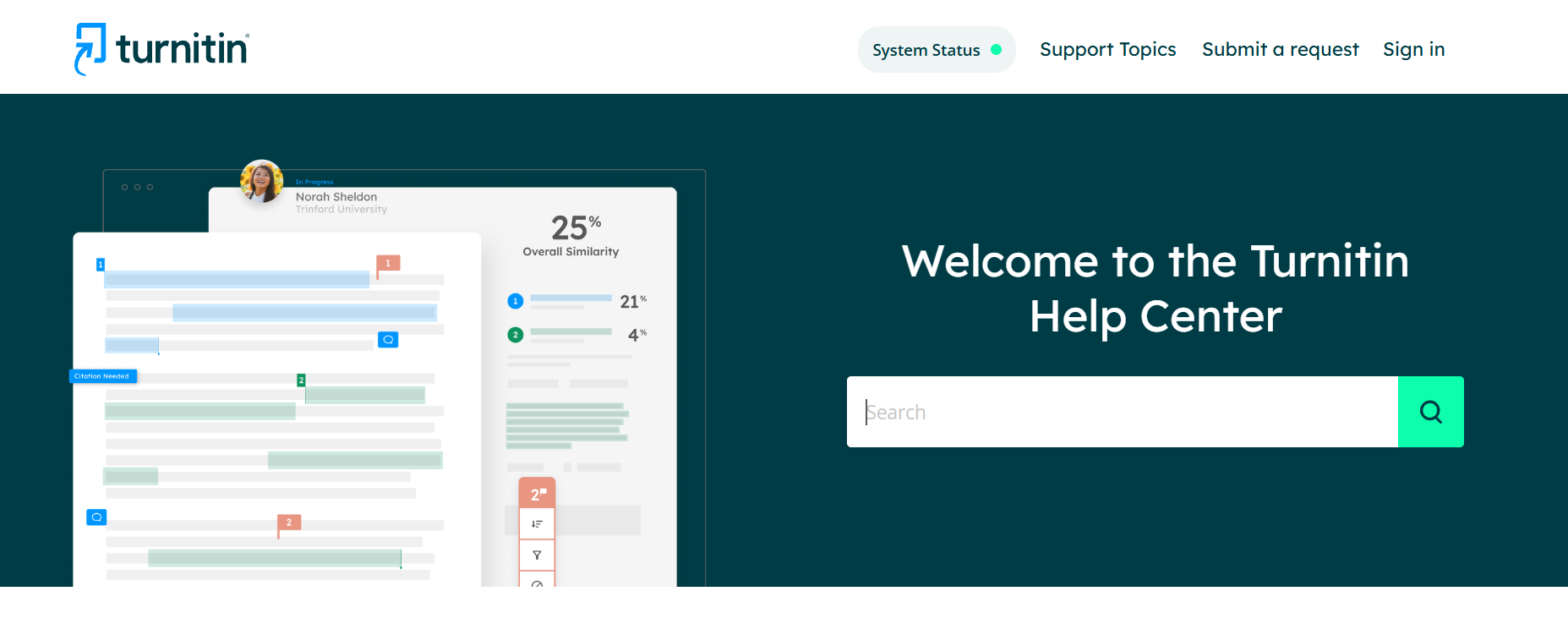
What Percentage Is Acceptable on Turnitin? Why Context Matters More Than the Number
There’s no single “acceptable” Turnitin similarity percentage, what matters most is how matches were generated and interpreted. Learn why context matters more than a number, how to read your report, and when to consult your instructor.