Is 25% Turnitin Similarity Bad? How to Interpret Matches & What Matters Most
Seeing a 25% similarity score on a Turnitin report can be a bit freaky at first , particularly if you’re a junior academic writer who doesn’t know what it means. I’d always freaked out at a yellow badge or a number that seemed ‘high’ compared to the norm. But I’ve come to learn something very important:a percentage isn’t a judgment, and 25% isn’t automatically “bad.” It just means that part of your text is similar to material on Turnitin’s database.
In this blog post I’ll walk you through exactly what 25% really means, what’s behind the number (the fine print is key!), when it can be a concern, and , most importantly , why the actual number is second to context.
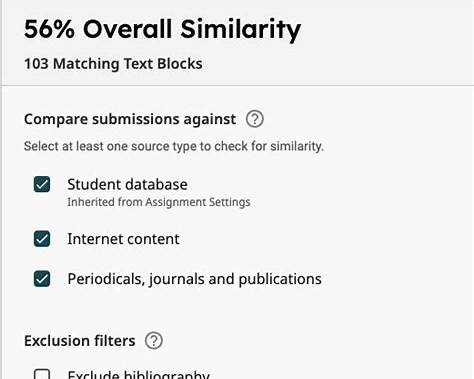
1. What the Similarity Percentage Really Means
But first, it's important to understand what Turnitin is actually doing. Turnitin isn't looking for plagiarism, it isn't judging your academic integrity. It's simply comparing everything in your submission to the thousands of web pages, academic papers and student submissions that you have.
And then it lets you know the percentage of text that was similar to something in their database.
So a 25% similarity rating is telling you that:
25% of the text in your document is similar to or matches content that exists in Turnitin’s database.
That could be a mix of properly cited quotes, standard terms, references, or even your own similar wording, none of which necessarily qualify as academic dishonesty.
I was reading one student support guide that was very clear on the fact that a 25% similarity score doesn't mean you plagiarized 25 percent of your paper, it might just be common text like cover pages and references, you know, depending how the instructor allows that report to be accessed.
2. Why 25% Isn’t Automatically “Bad”
A similarity percentage, even if it’s greyed out as yellow (meaning, 25–49% of your text was found elsewhere), is not a black and white thing, it’s a prompt to look further.
There are a lot of common, and often acceptable, reasons your text might have been flagged as being a match, like:
● Properly cited quotes and references, which Turnitin will still flag as matches even if they are used correctly.
● Standard academic phrases or terminology that naturally appear in many sources.
● Common introductory or methodology descriptions, especially in reports or research papers.
In fact, many sites for academic help imply that a similarity percentage of between roughly 11% and 25% is commonly seen as acceptable for a well-researched academic paper with proper citations and mostly your own analysis. See Turnitin's official explanation of color code.
Other academic commentary and student discussion corroborate this: being overly concerned about a number, 25% or even slightly above, is unnecessary if you haven’t directly copied text without attribution.
Visit here to see complete explanation of Turnitin Similarity Score (2026).
3. When 25 % Similarity Might Be a Concern (Match Context Matters)
Scenario | What It Looks Like In Your Report | Why It Could Be an Issue |
Large unquoted blocks | Long segments of matched text appear without quotation marks or in-text references | This pattern may indicate that large sections of another source were used without clear attribution, which can be academically problematic. |
Repeated matches to the same source | Many matches originate from a single publication or webpage | A high frequency of matches from one source can suggest over-reliance on that source’s wording rather than original writing. |
Poor paraphrasing (few but close matches) | Matched text is very similar to the source wording, even if paraphrased | If paraphrasing is too close to the original text structure or vocabulary, it may not be sufficiently transformed, which can be flagged as inadequate paraphrasing. |
4. How to Read Your Turnitin Match Details
Turnitin’s overall similarity percentage is just the tip of the iceberg. The real understanding comes from examining the detailed report.
Here’s how I usually approach it:
1. Open the Similarity Report
Click the percentage to open the full report. Turnitin highlights all text segments that matched other sources and shows where those matches came from.
2. Review Each Matched Source
For each match, identify:
● Whether the text is correctly quoted and cited
● Whether it’s a standard phrase or definition
● Whether it’s part of your reference list or title pages (which may be excluded by settings)
3. Evaluate in Context
Ask yourself:
● “Is this a direct quotation used appropriately?”
● “Is the match a common academic term or template text?”
● “Does this match represent original thought or extensive copying?”
This kind of analysis gives you real insight into whether a match is academic noise or something you need to rewrite or cite differently.
5. How I Personally Approach Worrying Scores
When I see a similarity percentage like 25%, I no longer panic. Instead, I treat that number as a diagnostic tool that prompts me to examine the report. I’ve learned:
● Numbers don’t tell the whole story. A score doesn’t confirm plagiarism; only a careful review of matched text can.
● Context is everything. Properly cited material contributes to the total, but it’s academically acceptable.
● Talk to instructors when in doubt. If you’re unsure why a particular match is flagged, a quick conversation can provide clarity.
6. Conclusion , Numbers Are Signals, Not Verdicts
There is no “bad” or “plagiaristic” similarity score. 25% similarity score using Turnitin is just a function of how much of your manuscript could be found in the Turnitin database.
It’s how you interpret those matches:
● Are the quotes properly cited?
● Are the “water words” increasing the numbers?
● Are there places that could use better paraphrasing or phrasing?
So look at the similarity score as a resource to learn not to repeat, to paraphrase properly and to make sure your sources are used transparently and responsibly.
FAQ: Common Questions About Turnitin Similarity Scores
Q1: Does a 25% similarity score mean I plagiarized?
A: No — a 25% similarity score does not automatically mean you plagiarized. Turnitin only shows what percentage of your text matches material in its database. Properly cited quotations, references, and common phrases may all contribute to the score without indicating plagiarism. You need to review the detailed match report to determine whether any matches represent academic improper use.
Q2: Is there a universal “acceptable” Turnitin similarity percentage?
A: No. There is no single acceptable score that applies to all courses or assignments. What is considered reasonable can vary by institution, discipline, and assignment type. Turnitin itself notes that there’s no fixed number that defines acceptable or unacceptable similarity; instructors usually interpret scores based on context.
Q3: Why does my similarity score include things like references or quotes?
A: Turnitin matches text based on string similarity, not academic judgment. Even properly formatted references and quotations count toward the similarity percentage unless your instructor has excluded them in settings. That’s why a moderate score may come from many legitimate sources that aren’t problems if cited correctly.
Q4: What do the Turnitin similarity color codes mean?
A: Turnitin uses colors to indicate the level of matching text:
Green = 0–24%
Yellow = 25–49%
Orange = 50–74%
Red = 75–100%
These are simply visual indicators for how much text matches other sources, and don’t by themselves define good or bad writing.
Q5: Can a paper with 0% similarity still be considered plagiarism?
A: Yes. A low similarity score doesn’t guarantee originality if the copied text is simply not in Turnitin’s database. Likewise, a high similarity might not be problematic if the matches are properly cited. Both scores require careful context evaluation by you or your instructor.
Q6: Should I always try to get my score below 25%?
A: It’s not necessary to aim for a specific number like 25%. Some universities may suggest lower numbers (e.g., under 15–20%), but the real priority should be reviewing how matched text is used and properly citing your sources. Many instructors focus on content quality and citation practice, not just the percentage.
Q7: What should I focus on if my similarity score seems “high”?
A: Instead of focusing on the percentage alone, look at why text was matched:
Are matches part of proper quotations?
Are they common phrases used in your field?
Are key ideas paraphrased correctly?
Reviewing these factors gives you a clearer picture of whether any action is needed.
Q8: Does Turnitin detect plagiarism or only similarity?
A: Turnitin reports similarity, not plagiarism. The software flags matching text, but plagiarism judgment must be made by an instructor or academic integrity officer. Turnitin alone does not decide whether academic misconduct occurred.

Related Articles
View all
Why Turnitin Flags Citations, Quotes & References: What It Really Means
Turnitin often highlights properly cited quotes and reference text,and it doesn’t mean you plagiarized. Learn why citations show up in similarity reports, what “false alarms” are, and how I check and interpret them without breaking formatting.
What Percentage Is Acceptable on Turnitin? Why Context Matters More Than the Number
There’s no single “acceptable” Turnitin similarity percentage, what matters most is how matches were generated and interpreted. Learn why context matters more than a number, how to read your report, and when to consult your instructor.
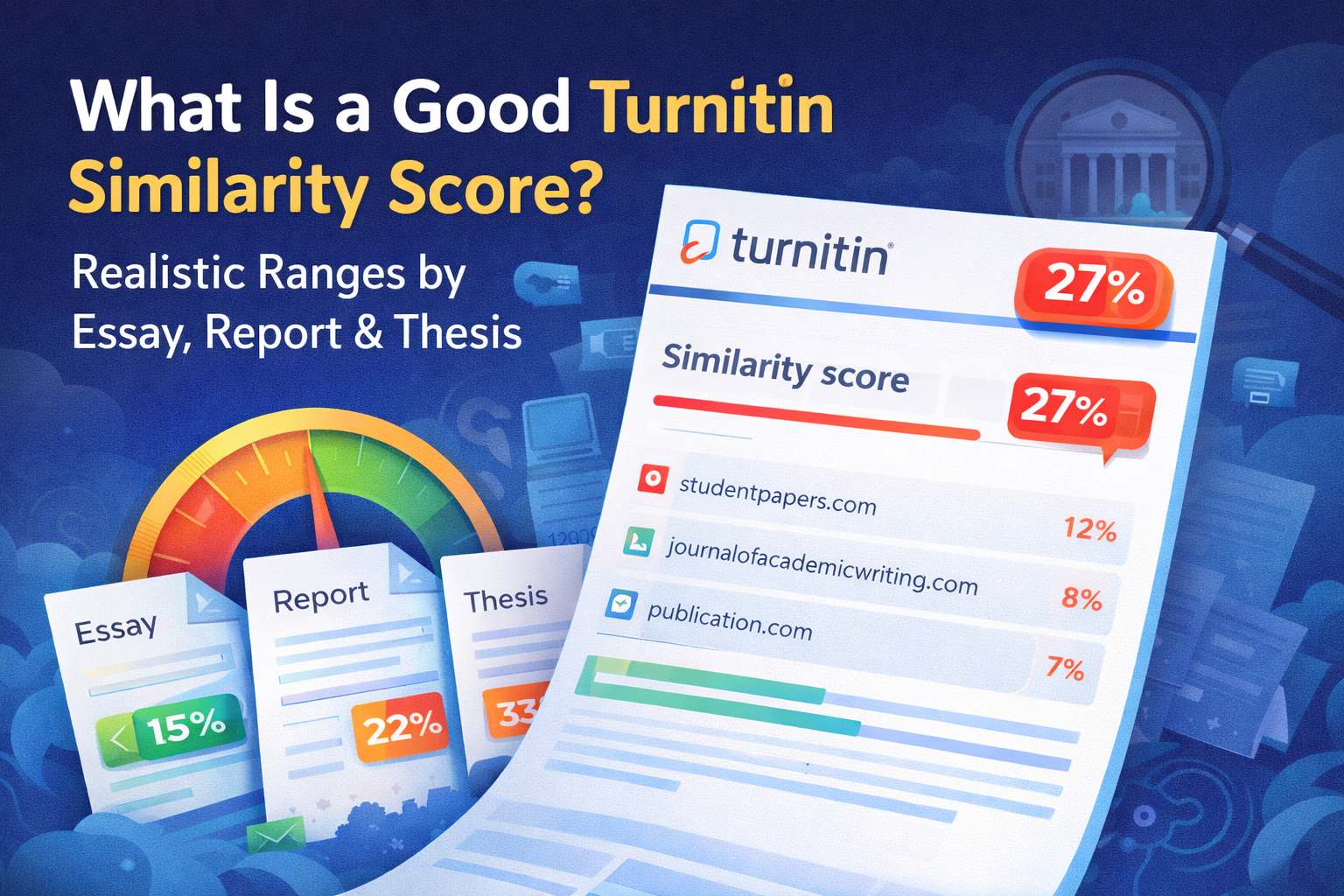
What Is a Good Turnitin Similarity Score? Realistic Ranges by Essay, Report & Thesis
Wondering what similarity percentage is considered acceptable on Turnitin for essays, reports, and theses? This guide explains realistic score ranges by paper type, why numbers vary by context, and what to check first when your score looks high.